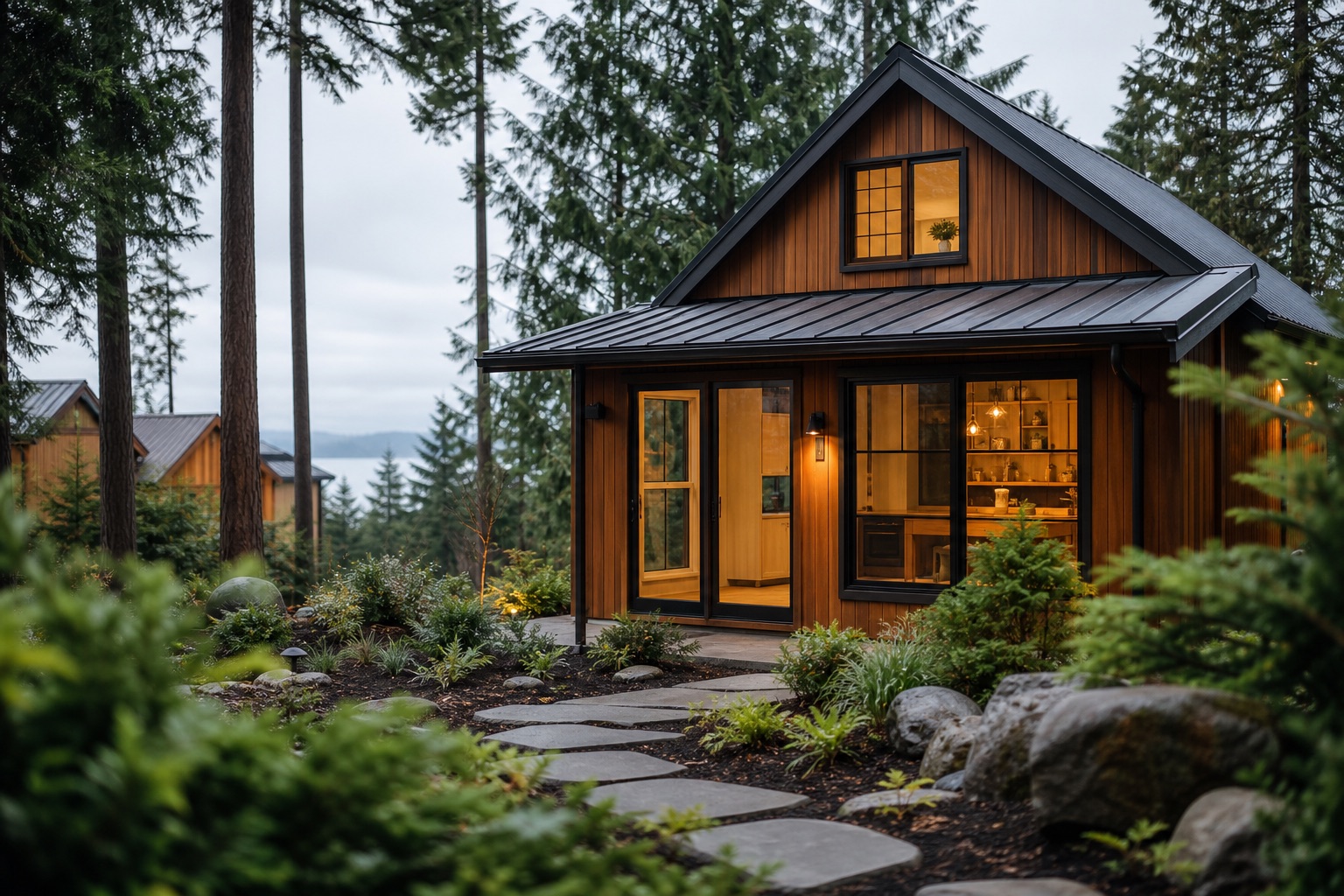
For decades, a backyard cottage in Washington was a rental asset — never a saleable one. That changed with HB 1337 and the unit-lot subdivision reforms now rolling through Seattle, Tacoma, Bellevue and unincorporated King County. In 2026, a growing number of homeowners can legally split their lot, give their DADU its own title, and sell it to a separate buyer. Here is the 2026 playbook — what the law actually says, the step-by-step process, the real numbers, and when it is (and isn't) worth doing.
The Legal Foundation: HB 1337, HB 1110, and Unit-Lot Subdivision
Washington's HB 1337 (2023, fully in force in 2026) requires cities in urban growth areas to allow at least two ADUs per residential lot and prohibits owner-occupancy mandates. HB 1110 layered on middle-housing requirements that pushed cities to streamline lot splits. The key unlock for selling a DADU is the unit-lot subdivision: a recorded short plat that carves the parent lot into a primary-house lot and a separate DADU lot, each with its own legal description, address, and title.
Seattle's DCI began accepting unit-lot subdivisions for DADUs in 2024; Tacoma, Bellevue, and most of unincorporated King County followed in 2025. The result: a 750 sq ft DADU built in 2022 as a rental can, in 2026, be platted, refinanced separately, and sold to a first-time buyer — often for $400,000–$650,000 depending on the city.
The 7-Step Process to Sell a DADU Separately
- Feasibility review — confirm your zone allows unit-lot subdivision and that your DADU meets independent-utility, setback, and access requirements. 2) Survey and short-plat application — a licensed surveyor records new lot lines; the city assigns a new address. 3) Utility separation — water, sewer, power, and gas must each have an independent meter and shutoff serving only the DADU. 4) Easements — record cross-access, drainage, and shared-wall easements where needed.
- Final plat recording with the county auditor — this is the moment the DADU becomes its own legal parcel. 6) Title and lender package — order a new title commitment and, if you have a mortgage on the parent property, get a partial release from your lender. 7) List and close — the DADU can now be sold like any single-family home, financed with conventional, FHA, or VA loans depending on the buyer.
Real Numbers: Cost, Timeline, and ROI in 2026
Hard costs to subdivide a DADU in Puget Sound run roughly $18,000–$45,000: survey ($3,500–$6,000), short-plat fees ($4,000–$9,000 depending on city), utility separations ($6,000–$20,000 — by far the biggest variable), legal and title ($2,500–$5,000), and lender release fees ($500–$2,500). Timeline is 4–9 months from feasibility to recorded plat in most King County jurisdictions.
The payoff is significant. A turnkey 750 sq ft Seattle DADU that cost $260,000 to build typically appraises as a standalone home at $475,000–$575,000 in 2026 — a $200,000+ uplift over its value as an attached rental on the parent parcel. In Bellevue and Kirkland, separated DADUs have closed above $625,000.
When It Makes Sense — and When It Doesn't
Subdividing is the right move when your DADU is fully independent (no shared walls or shared mechanicals), your lot is large enough to meet minimum-area rules after the split, and you want to free up capital without selling the primary home. It is the wrong move if your DADU shares a foundation or roof with the main house, if the parent mortgage cannot be partially released, or if your rental income on the DADU exceeds 7% net yield — in that case, holding usually beats selling.
Three Puget Sound Scenarios We're Seeing in 2026
Seattle (Ballard): a 2021-built 720 sq ft DADU on a 5,200 sq ft lot subdivided in 7 months for $31,000 in soft costs; sold in May 2026 for $539,000. Bellevue (Crossroads): a 2023 DADU on a sloped 7,800 sq ft lot subdivided in 9 months ($42,000 in costs including a new sewer lateral); listed at $645,000. Tacoma (North End): a 2020 garage-to-DADU conversion subdivided in just 4 months under Tacoma's pre-approved short-plat track for $22,000; sold to a first-time buyer for $389,000.
Thinking About Subdividing? Start With Feasibility.
Every lot is different, and the difference between a 4-month and a 12-month subdivision is almost always discovered in the first feasibility review. Our permitting team has guided 11 DADU unit-lot subdivisions across Seattle, Bellevue, Tacoma, and unincorporated King County since 2024. If you are considering a sale — or just want to know what your DADU could be worth as its own parcel — we will run the feasibility for free.
Frequently Asked Questions
Can you sell a DADU separately from the main house in Washington?
In many jurisdictions, yes. HB 1337 plus unit-lot subdivision reforms let you record a short plat that splits the parent lot into a primary-house lot and a separate DADU lot, each with its own legal description and title, so the cottage can be sold to a separate buyer.
What does it cost to subdivide and sell a DADU?
Hard costs across the Puget Sound run roughly $18,000–$45,000: survey, short-plat fees, utility separations (the biggest variable), legal and title work, and lender release fees. Timelines are typically 4–9 months from feasibility to recorded plat in King County jurisdictions.
When is subdividing a DADU a bad idea?
When the unit shares a foundation, roof, or mechanicals with the main house, when the lot cannot meet minimum-area rules after the split, when the parent mortgage cannot be partially released, or when the rental yield already beats what a sale would return.
Selling a DADU separately is no longer theoretical in Washington — it is happening every week. The homeowners moving first are unlocking real liquidity. Book a free feasibility review and we'll tell you exactly what your lot can do.